
Beating the PSTN Switch-Off: How IoTie's IoT SIM Cards Keep Your Critical Devices Connected
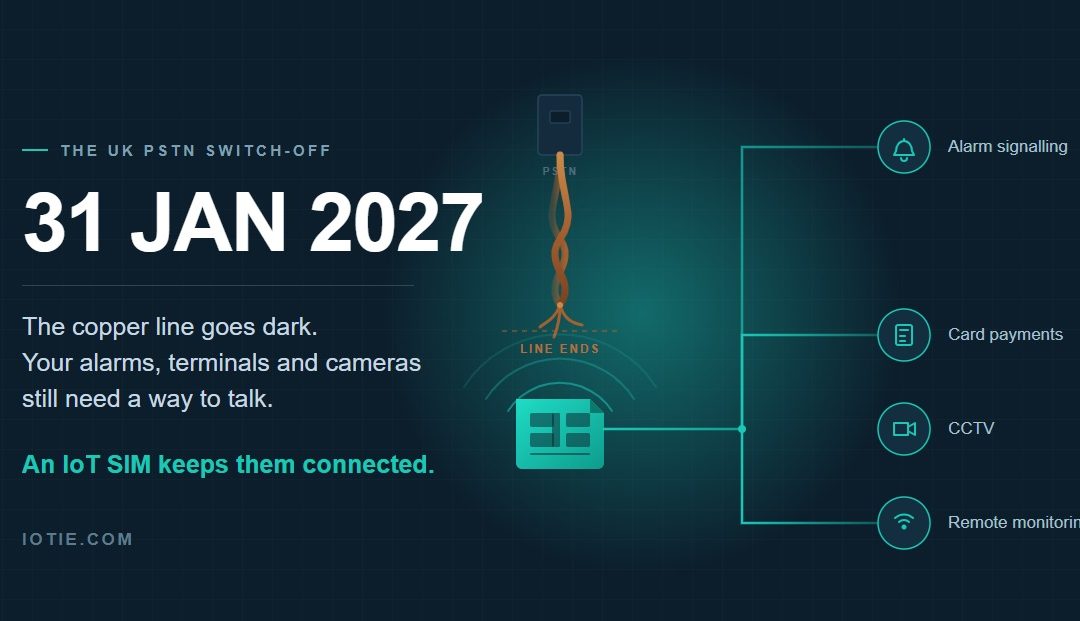
The clock is ticking on the UK's copper telephone network. On 31 January 2027, the Public Switched Telephone Network (PSTN) — the analogue system that has carried Britain's phone calls for well over a century — will be permanently switched off. This isn't a soft transition or a phased coexistence. Once the network is retired, any device still relying on a copper phone line will simply stop working.
For most people, "the phone line switch-off" sounds like it's only about voice calls. In reality, the copper network underpins a huge estate of everyday, business-critical equipment: alarm systems, lift emergency lines, CCTV cameras, card payment terminals, door entry systems, telecare pendants and countless remote-monitoring devices. It's these hidden dependencies — not the desk phone — that catch most organisations out.
The good news? There's a clean, cost-effective replacement for the many devices that only ever needed a data connection: the IoT SIM card. This is exactly where IoTie comes in.
A quick refresher: what's actually happening in 2027
The PSTN is Openreach's legacy copper-wire infrastructure, first rolled out in the late 1800s. As a 20th-century technology, it can no longer meet modern demands, and it's becoming increasingly fragile and expensive to maintain. Openreach is retiring it in favour of digital, IP-based alternatives.
A few key dates and facts worth knowing:
- 31 January 2027 is the confirmed national end-of-life date for PSTN and ISDN services. The original December 2025 deadline was extended to give providers more time to migrate vulnerable and complex users safely.
- A national "stop sell" has been in force since September 2023 — in most areas you can no longer order new copper-based lines or make significant changes to existing ones.
- It's estimated that a majority of UK organisations still rely on PSTN or ISDN in some form, with millions of premises affected overall.
- Legacy broadband services that depend on the copper line — including ADSL and FTTC — are being withdrawn alongside the voice network.
The message from the industry is consistent: the deadline is fixed, and the smart move is to audit your dependencies and migrate early rather than scramble in the final months.
Why IoT SIM cards are the natural replacement for data-only devices
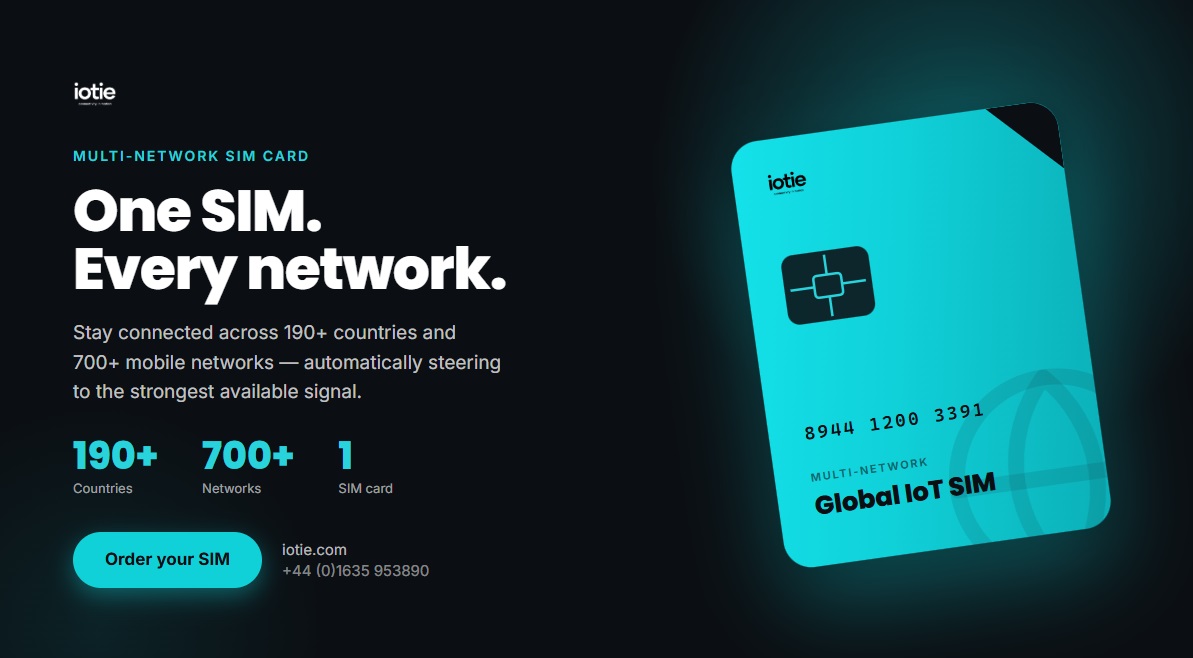
When a device relies on a phone line purely to send and receive data — rather than to carry a human voice conversation — a cellular IoT SIM is often the simplest and most robust like-for-like replacement. Instead of routing traffic over ageing copper, the device communicates over the existing 4G and 5G mobile networks.
The advantages over the old copper connection are significant:
- Resilient, multi-network coverage. A multi-network SIM can connect to whichever mobile network is strongest in a given location, and switch automatically if a network drops. That's a level of built-in redundancy a single fixed copper line never offered.
- No dependence on a fixed line. Devices in remote sites, temporary locations or areas with poor fixed-line service can still get online.
- Faster, cleaner deployment. No engineer visit to install a physical line — a SIM is fitted, activated and managed remotely.
- Enhanced security. IoT SIMs support features such as private APNs, encryption and authentication, giving end-to-end protection for the data travelling between devices and networks — often without the cost of configuring a separate VPN.
- Lower running costs. For many low-data applications, cellular connectivity is more economical than maintaining a dedicated line.
For applications where a genuine voice conversation is still needed — lift emergency comms or door intercoms, for example — VoIP or a SIP-based service remains the right tool. But for the large category of data-only devices, IoT SIMs are frequently the most efficient answer.
How IoTie helps businesses make the switch
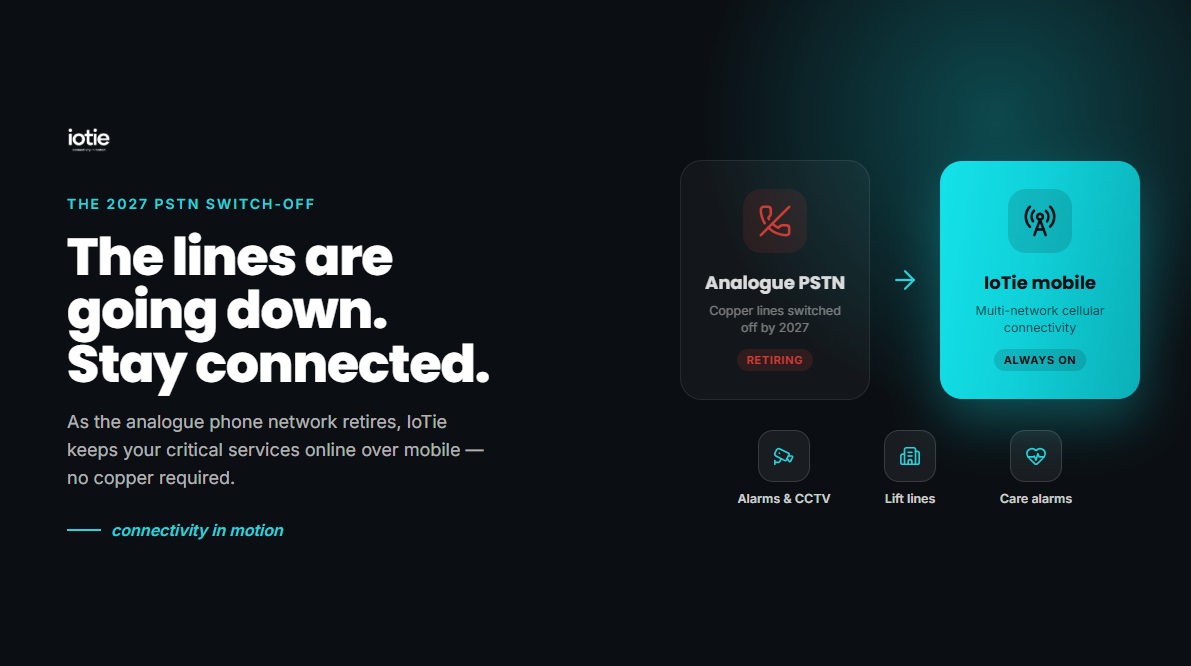
IoTie is a UK-based multi-network IoT and M2M SIM provider built specifically for this kind of connectivity challenge. Here's what makes its offering well suited to PSTN-replacement projects.
Access to all four UK networks — and 700+ worldwide
IoTie's multi-network SIMs give access to the UK's major mobile networks (EE, O2, Three and Vodafone), plus more than 700 mobile networks across 190+ countries from a single SIM. You can choose un-steered SIMs (which lock onto the strongest available signal automatically) or steered / soft-steered SIMs (which follow a preferred network order and can be redirected over the air). For a device replacing a once-reliable phone line, that automatic failover is exactly the resilience you want.
The right SIM for every device
IoTie supplies a full range of form factors — traditional Mini, Micro and Nano SIMs, plus rugged MFF2 embedded SIMs and eSIMs — so the SIM can be matched to everything from a card terminal to an industrial sensor. Connectivity spans 3G, 4G, 5G and LTE-M / NB-IoT, covering both high-bandwidth needs (like CCTV streaming) and low-power, narrowband applications.
Fixed IP SIMs for secure, remotely managed equipment
For devices behind firewalls or requiring remote access — security cameras, digital signage, remote monitoring, or a resilient backup connection — IoTie offers fixed public IP SIMs. A static IP enables port forwarding, site-to-site IPSEC VPNs and remote management, and IoTie can provide a private network APN to connect devices directly to your own network.
A single management platform
Every SIM is controlled through the IoTie SIM Management Platform, a single dashboard for the full lifecycle of your connectivity. From it you can activate SIMs with same-day provisioning, monitor real-time data usage, view SIM status, data plans, IMSI and authentication attempts, track call and SMS usage, troubleshoot endpoints on a geographic map, and block or deactivate SIMs instantly. For an IT team managing a fleet of migrated devices, that central visibility replaces the guesswork of scattered copper lines with proper oversight.
Voice, SMS and data where you need it
While many replacement devices need data only, IoTie can also provide voice and SMS on its SIMs — useful for applications such as patient-safety and alarm systems that need to place calls or send text alerts.
Real-world applications: what you can move onto an IoTie SIM
Here are the kinds of PSTN- and ADSL-dependent devices that map cleanly onto cellular IoT connectivity:
- Intruder and fire alarm systems — data signalling paths that must stay online and can benefit from automatic network failover.
- Lift emergency lines — the data/monitoring side of lift communications (with VoIP handling the voice element where required).
- CCTV and security cameras — including higher-bandwidth streaming over 4G/5G, ideal for a fixed-IP SIM.
- EPOS and card payment terminals — keeping retail and hospitality transactions running without a copper line.
- Door and gate entry systems — remote, reliable access control.
- Telecare and patient-safety devices — alarm and monitoring equipment where a resilient, multi-network connection matters most.
- Remote monitoring and telemetry — utilities, environmental sensors and industrial automation.
- Traffic lights, ATMs and other unattended infrastructure — assets in the field that previously leaned on ADSL or a fixed line.
- Digital signage — networked displays that need a dependable data feed.
- Broadband backup / primary connectivity — a cellular failover, or a primary link where fixed-line service is poor.
Don't wait for the deadline
The PSTN switch-off has already slipped once, and Openreach has made clear it won't move again. With the stop-sell already biting and line-rental costs rising as the deadline nears, the organisations that come out ahead are the ones that audit early and migrate on their own timetable — not in a last-minute rush.
A sensible first step is a simple audit: identify every device and service still hanging off a copper phone line or ADSL connection, then decide which need voice (VoIP/SIP) and which are data-only candidates for an IoT SIM. For that second, often-overlooked category, IoTie offers a fast, secure and centrally managed path off the copper network — and onto connectivity that's built for the digital age.
Ready to plan your migration? Get in touch with the IoTie team to talk through your devices and find the right SIM solution before January 2027 arrives.
This article is for general information. PSTN switch-off timelines and service availability can change — check current details with your connectivity provider before finalising any migration plan.