
In the world of the Internet of Things (IoT), we often focus on the physical hardware—the sleek sensors, the rugged industrial gateways, or the smart meters buried beneath city streets. But between that device and the cloud sits a silent, invisible gatekeeper that determines whether your data reaches its destination or vanishes into the digital ether. This gatekeeper is the Access Point Name (APN).
If you are building an IoT solution, understanding the APN isn't just a technical requirement; it is the foundation of your network security, scalability, and operational reliability.
The Unsung Hero of the IoT World: What Exactly is an APN?
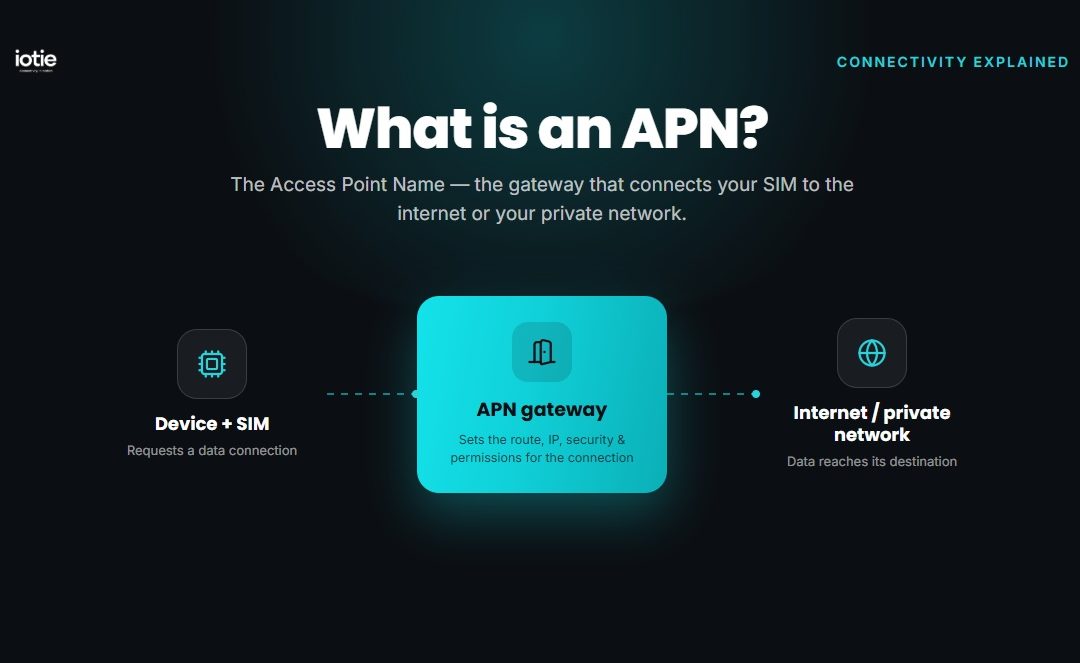
To understand an APN, imagine you are standing in a massive international airport. Your IoT device is a traveler trying to reach a specific office building in a distant city. The cellular network (LTE, 5G, or NB-IoT) is the airplane that carries the traveler across the sky. However, once the plane lands, the traveler needs to know exactly which gate to exit through and which private shuttle to board to reach their final destination.
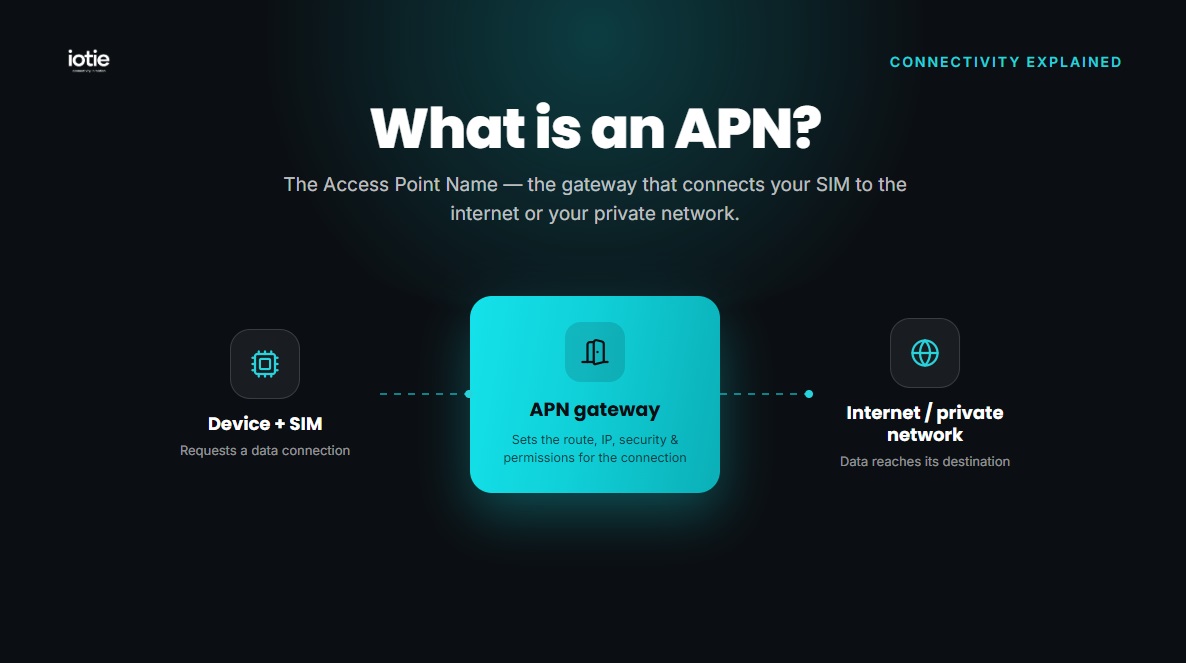
The Access Point Name (APN) is that specific set of instructions, often referred to as APN settings, which can also define the APN type for specific services. It is a configuration profile stored on the mobile device’s SIM card or within its software that tells the cellular network how to route data. It acts as the gateway between a mobile network (like Verizon, AT&T, or Vodafone) and another network, typically the public internet or a private corporate server. Without a correctly configured APN, a device might "see" the cell tower, but it will be denied network access to the data highway, leaving it stranded and offline.
How an APN Works: The Bridge Between Your Device and the Internet
An APN doesn't just sit there; it facilitates a complex digital conversation every time a device powers on or attempts to send a packet of data. This process happens in milliseconds, but it is the difference between a functional smart city and a collection of expensive paperweights.
The Handshake Protocol
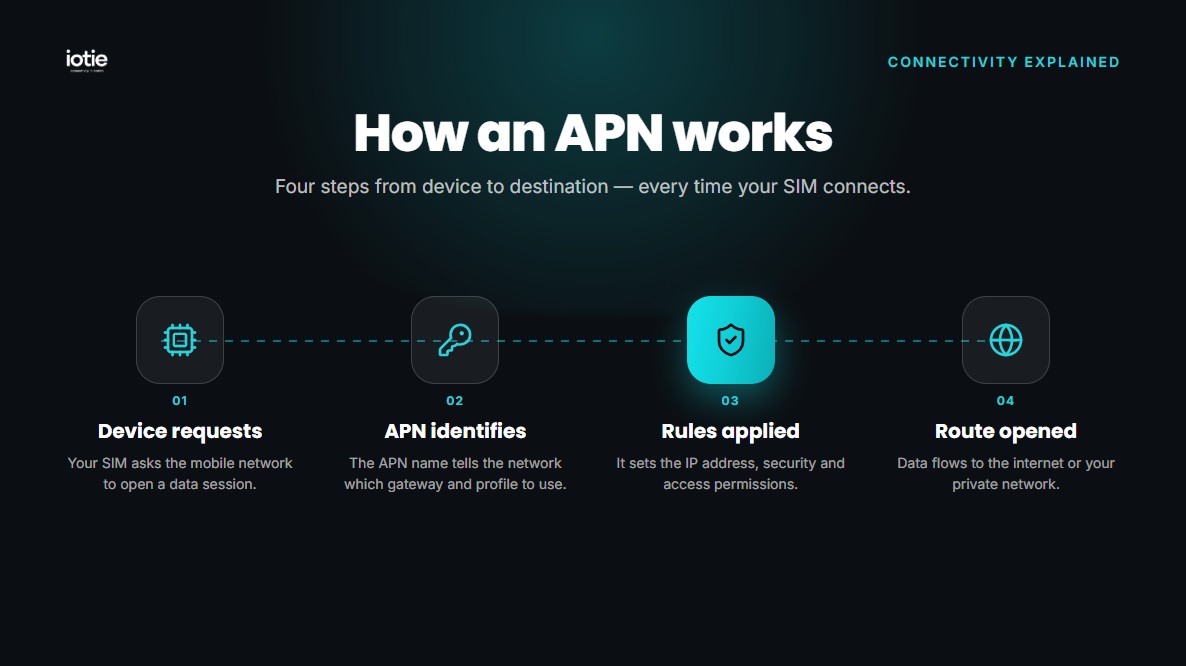
The moment your IoT device wakes up, it initiates a "handshake" with the nearest cellular tower. It presents its credentials—its IMSI (International Mobile Subscriber Identity) from the SIM card—and requests a data session. During this handshake, the device whispers its APN to the network. The network checks this name against its internal database to verify that the device is authorized to use that specific gateway. If the handshake is successful, a data connection is established, and the "bridge" is lowered.
Identifying the Gateway
Once the handshake is complete, the APN acts as a routing table. It tells the carrier’s Gateway GPRS Support Node (GGSN) or Packet Data Network Gateway (PGW) exactly where to send the data. Does this traffic belong on the open, public internet? Or should it be tunneled through a secure virtual private network (VPN) directly into a company’s private AWS instance? The APN provides the roadmap for efficient data routing, ensuring that sensitive industrial data traffic doesn't get mixed up with general consumer web traffic.
The Core Components of an APN Structure
An APN might look like a simple web address (e.g., iot.telecom.com), but it is actually composed of two distinct parts that serve different functions within the carrier's infrastructure.
The Network Identifier
The Network Identifier is the mandatory part of the APN. It defines the external network to which the gateway is connected. For a hobbyist project, this might simply be "internet." For an enterprise-grade IoT deployment, this identifier might be a custom string—like global.fleet-manager.static—that points to a specific private network architecture. It tells the carrier, "This device belongs to this specific service."
The Operator Identifier
The Operator Identifier is optional but crucial for complex routing. It consists of the Mobile Country Code (MCC) and the Mobile Network Code (MNC), which identify the specific MNO (Mobile Network Operator). This part of the APN identifies which specific carrier or MVNO the SIM belongs to. While often hidden from the end-user, this component allows the network to handle "roaming" scenarios, ensuring that if a French SIM card wakes up in a Brazilian tower, the network knows exactly which home carrier to contact to validate the connection.
Why APNs are the Secret Sauce of IoT Scalability
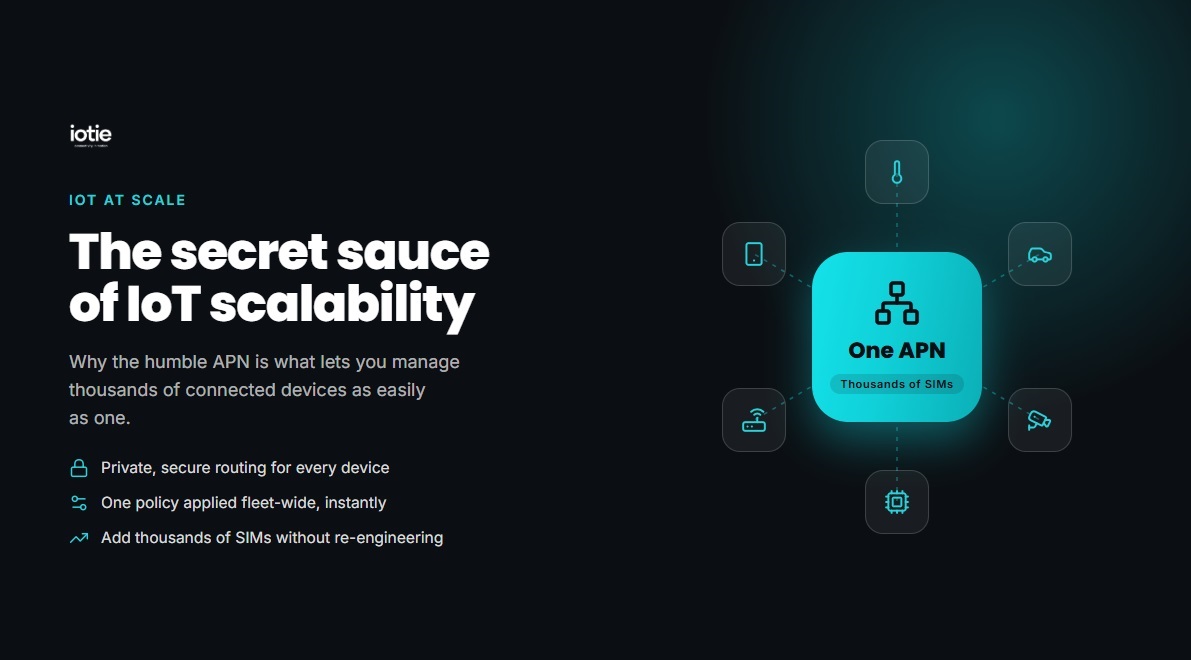
When you are managing five devices, you can afford to be casual about connectivity. When you are managing 50,000 devices spread across three continents, the APN becomes your most powerful tool for management and scale.
Security Beyond the Public Web
One of the greatest risks in IoT is the "inbound attack." If a device is on a standard public APN, it is often assigned a public IP address, making it visible to every botnet and hacker on the internet. By using a private APN, you effectively take your devices "off the grid." The devices can talk to your server, but the public internet cannot see or ping your devices. This creates a "walled garden" that is significantly harder to breach.
IP Address Management (Static vs. Dynamic)
In a typical consumer smartphone setup, your IP address changes constantly (Dynamic IP). This is fine for browsing Instagram, but it’s a nightmare for IoT. Many industrial applications require a Static IP, where the device’s address never changes. A custom APN allows you to assign these fixed addresses. This is vital if you need to "reach down" into a device—for example, to remotely troubleshoot a malfunctioning wind turbine or push a firmware update to a medical device.
Custom Routing and Data Logic
APNs allow for sophisticated data logic. You can configure an APN to restrict devices to certain protocols (like MQTT or CoAP), disable consumer services like MMS (multimedia messaging service), or limit their communication to specific IP ranges. This prevents "data runaways"—scenarios where a bug in the device's code causes it to ping a random server repeatedly, racking up thousands of dollars in overage charges in a single weekend.
Public vs. Private APNs: Which One Does Your Project Need?
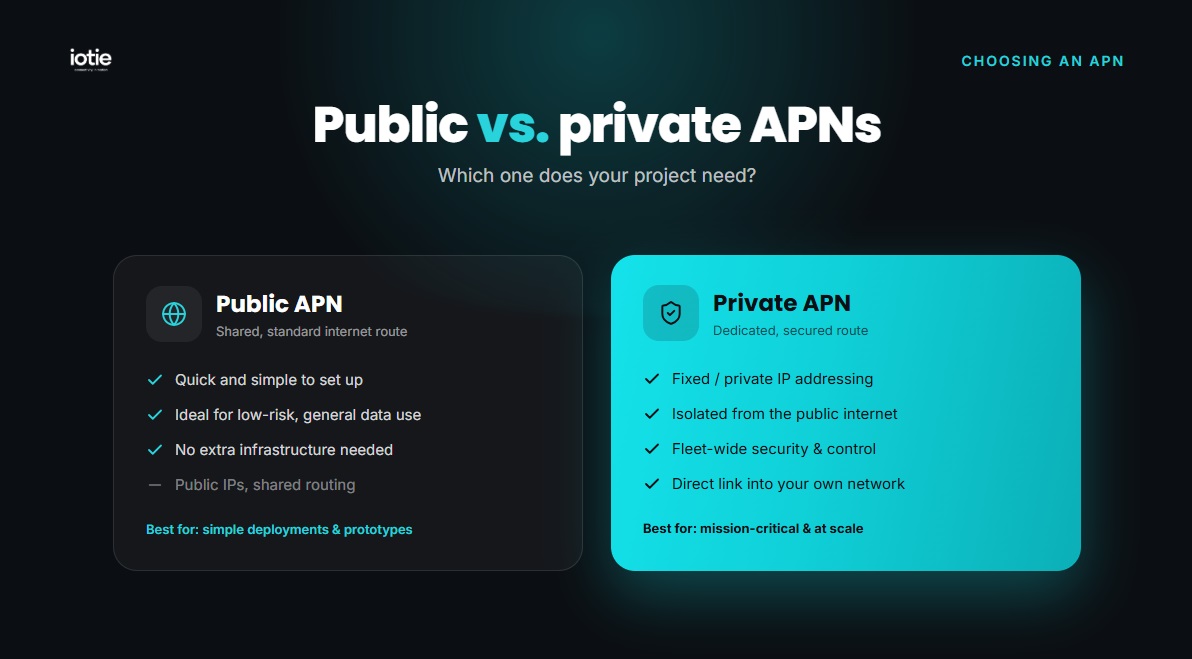
Choosing between a public and private APN is one of the most consequential decisions you will make during the design phase of your IoT project.
The Public APN: Convenience at a Cost
A public APN is the "default" setting provided by a carrier. It is easy to set up—often requiring zero configuration—and it is generally cheaper upfront. However, you share this gateway with thousands of other users. This means you have no control over security policies, no ability to use static IPs, and you are subject to the carrier's standard firewall settings. It is excellent for prototypes or non-critical consumer devices, but it rarely suffices for enterprise solutions.
The Private APN: Maximum Control and Security
A private APN is a dedicated gateway built specifically for your organisation. While it carries a higher setup cost and requires more technical coordination with the carrier, it offers total isolation. You can define your own firewall rules, manage your own IP pool, and ensure that your data never touches the "dirty" public internet. For any project involving sensitive data, healthcare, or critical infrastructure, a private APN isn't an option—it’s a requirement.
The Role of APNs in International IoT Roaming
If your IoT devices move—perhaps they are trackers on shipping containers—they will inevitably cross borders. This is where the APN plays a starring role in the "roaming" drama.
Solving the "Losing Signal" Problem
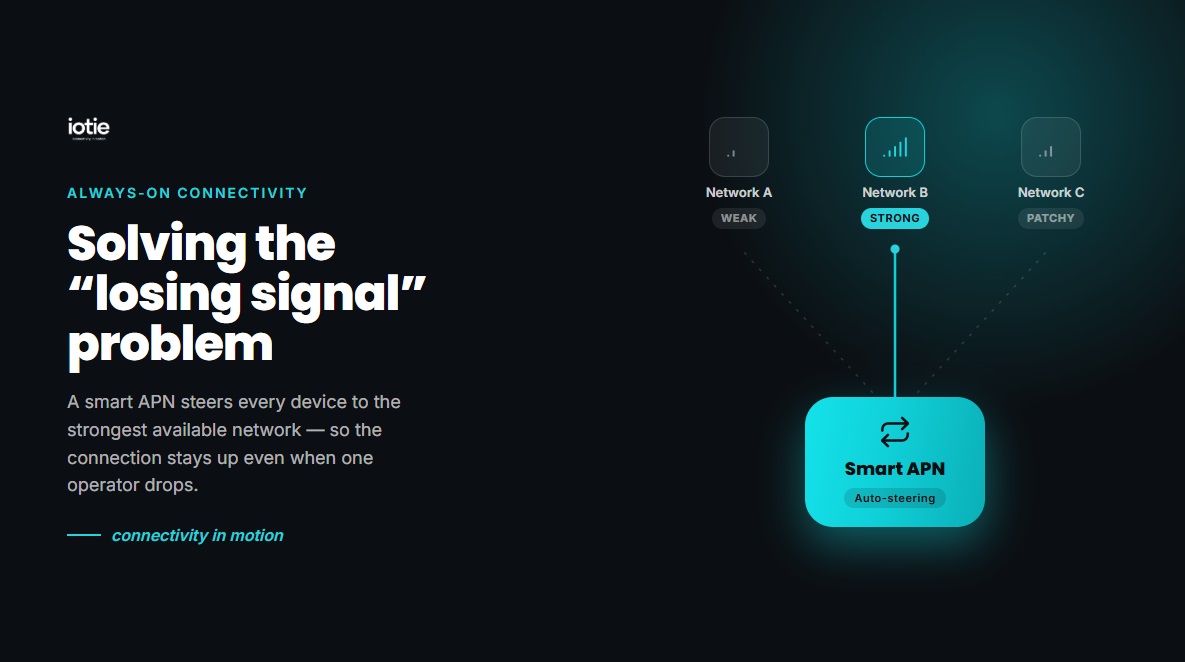
When a device enters a new country, it must find a "friendly" local network. The APN acts as the North Star during this transition. It tells the local network, "I am a guest here, but I need to connect back to my home gateway." If the APN is configured correctly, the device can maintain a continuous session even as it hops from a German network to a Polish one, see the IoTie Multi-Network SIM card for further information.
Steering of Roaming and Local Breakouts
Sophisticated IoT deployments use APNs to manage "Local Breakouts." Instead of routing all data from a sensor in Japan all the way back to a server in London (which causes massive latency), a smart APN configuration can "break out" the data locally in Tokyo. This keeps the connection fast and reduces the cost of backhauling data across oceans.
Common APN Configuration Challenges (And How to Solve Them)
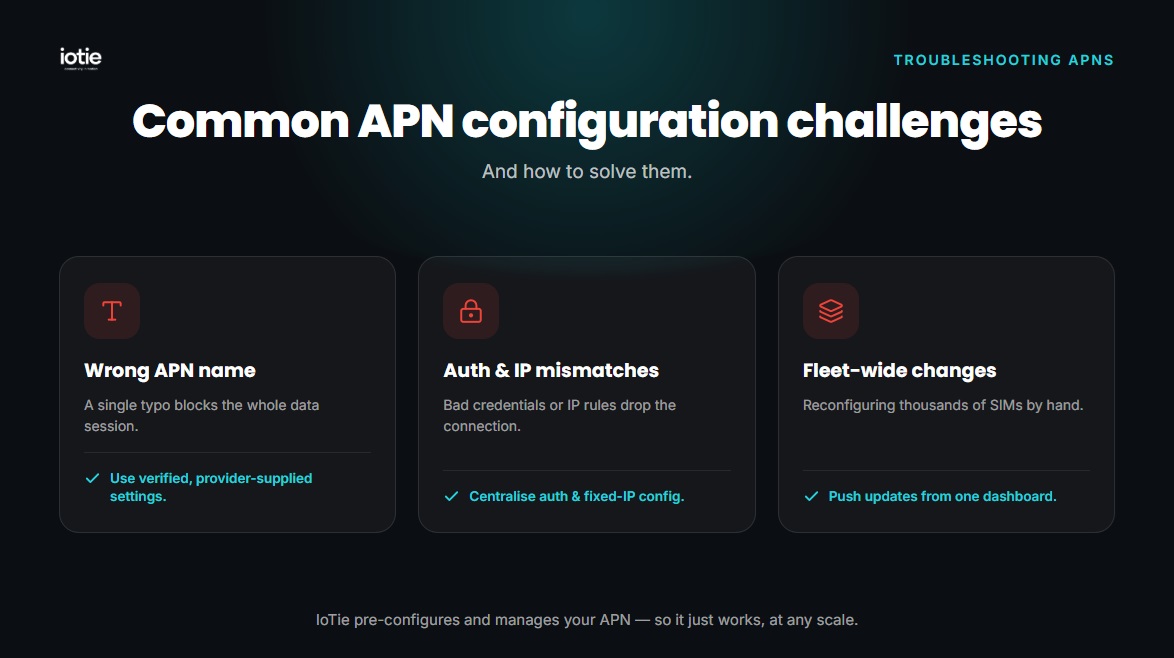
Even with the best intentions, APN issues are the leading cause of "dead on arrival" IoT deployments.
The "Invalid APN" Connectivity Gap
The most common support ticket in IoT is a device that won't connect because of a typo. An APN must be character-perfect. A misplaced period or an extra space in the configuration string will cause the carrier to reject the connection silently. The solution is rigorous automated provisioning—never rely on manual entry for thousands of devices.
Hardware Compatibility Issues
Not all cellular modules handle APN switching the same way. Some low-cost modules "hardcode" certain APNs or require a full reboot to change gateways. When selecting hardware, ensure the cellular modem supports "Multi-APN" configurations, allowing the device to maintain one connection for diagnostic data and another for high-security payload data.
Managing High Latency in Remote Deployments
In remote areas, the path from the cell tower to your private APN gateway might be long and convoluted. If you notice high latency, the issue is often not the "bars" of signal on the device, but the geographical location of the APN's GGSN. Working with a connectivity provider that offers localised gateways can slash latency from 500ms to under 50ms.
The Future of APNs: eSIMs and Zero-Touch Provisioning
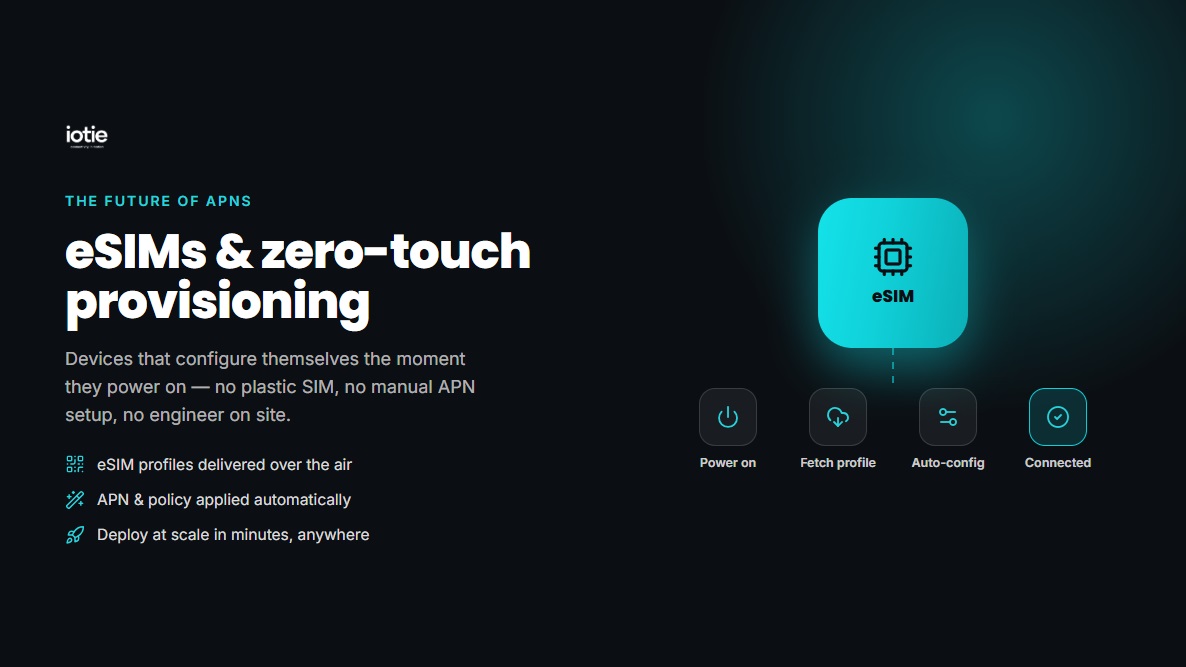
The era of manually typing APNs into a terminal window is coming to an end. The rise of the eSIM (eUICC) is changing the game. With an eSIM, the APN can be updated over-the-air (OTA). If you decide to change carriers or move from a public to a private APN, you no longer need to physically swap SIM cards in thousands of devices.
Furthermore, we are moving toward "Zero-Touch Provisioning." In this future, a device wakes up, identifies its location and use case, and automatically downloads the correct APN profile from the cloud. This removes the "human error" element and allows IoT networks to scale into the millions with minimal friction.
Choosing the Right APN Strategy for Your IoT Solution
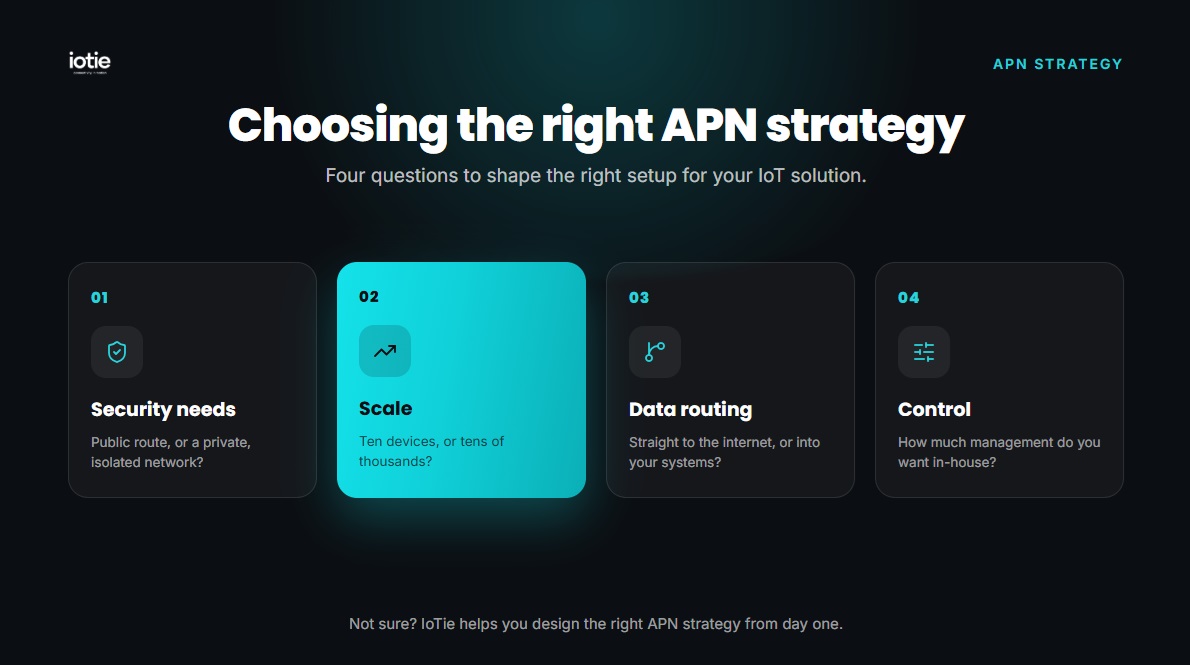
The APN is the invisible thread that stitches your IoT ecosystem together. When choosing your strategy, don't just look at the monthly mobile data cost. Ask yourself:
How much would a data breach cost my company? (If the answer is "a lot," choose a Private APN).
Do I need to remotely access my devices? (If yes, you need Static IPs via a custom APN).
Will my devices cross borders? (If yes, look for a provider with Global APN capabilities).
By mastering the APN, you aren't just connecting devices; you are building a secure, resilient, and intelligent bridge between the physical world and the digital future. Treat your APN strategy with the same care as your hardware design, and your IoT project will have the solid foundation it needs to thrive.
How IoTie can help with choosing the right APN strategy
Get in touch with the IoTie team to talk through your IoT project and get help with choosing the right APN model.